
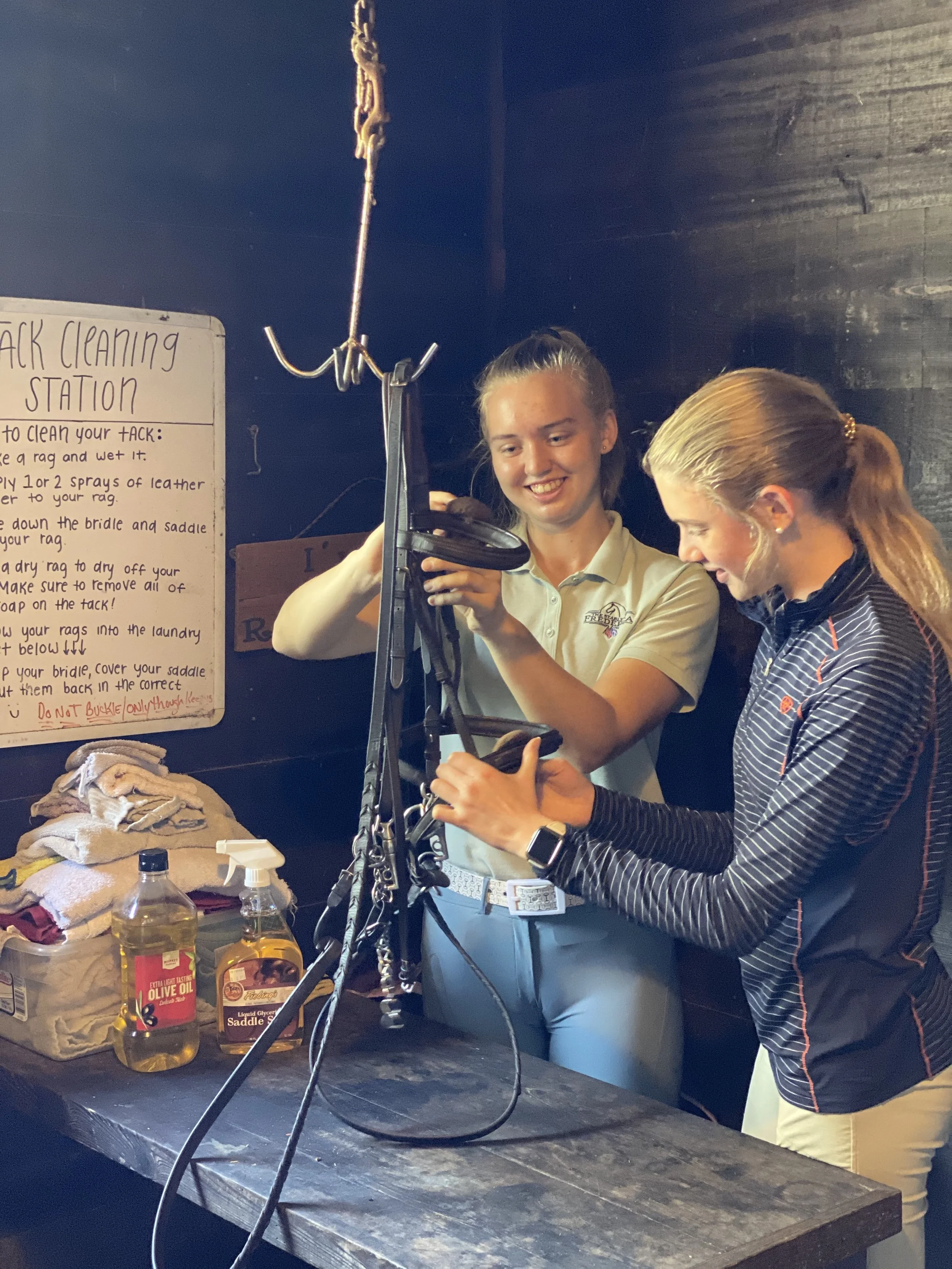
We have an entirely new class of the most adorable pony riders and junior riders that have begun attending competitions with The Stables. Many of them have attended their first away horse show in 2026, and the following questions are some I’ve heard:
“What can I do to help? What can Little Susie do to help?”
“Do you want Janie-Boop to come in at 6am to help feed and clean stalls?”
And I LOVE these questions. Every stables has their own program on showing and how they utilize students/grooms/staff at a competition. So for all my new Stables parents, here is the 101 course on labor and learning Stables-style at competitions, both rated and non-rated!
As much as I’d like to say that all my students are fully capable of caring for their horses from dawn to dusk at a show its just not true. While our program requires students to attend ground lessons on stall cleaning, feeding, etc., those tasks are not part of their daily barn routines. Adding in those responsibilities at horse shows tends to elevate the stress levels of riders that are already dealing with the nerves of performance and competition. My goal as a trainer and coach is to try and create a riding experience as close to their practice rides are so that my riders are able to stay focused on the job at hand. So here’s the evolution of how we develop horsemanship skills at competitions:
“Little Susie Stage” these are typically my younger riders, maybe 8 and below, or older but very very green riders. Their job is to show up dressed, at some point hand walk their horses, try not to cry, vomit, or panic before or during their rides. After their rides they are asked to clean their tack as best they can and put all their belongings away. We usually help with rinsing/bathing and do all other tasks for their horses. I love your kids, but I don’t want to be dealing with an over-excited 6 year old at 6am. I’ll clean the stall.
“Sweet Suz Stage” includes my pre-teen/teen riders that have now done a handful of shows, and know that their job is to come in to the barn 8am-9am at the latest (no matter what time they show) to hand walk their horses, and help with some Little Susie wrangling. They might be asked to pick already-cleaned stalls, drop a flake of hay, etc. They are typically expected to help with afternoon chores like dropping grain and refilling water buckets.
“Understudy Susan Stage” are my big girls, primarily teens. I ask a lot of my teens; they are expected to come in early in the morning and help with feed, hay, and stall cleaning. They help throughout the day with horse care, kid care, trainer care. I would like my teens to learn all the skills of a working student or staff member, while having plenty of time to relax, focus, and enjoy the showing experience. This is the stage that I want the riders to gain the appreciation and understanding on the consistent background effort that is involved in every competing pair.
“Super Susan Stage” is a working student or intern type role. They are up and working the barn, the arenas, and every point in between. They come in at the beginning of the day and help trainers set up the day, oversee the “understudies,” keep the horses fed and hydrated at the barns, help as a go-for, and stand ready to jump in to help school horses and get miles in the arena. These are the riders that come back to help with night check, and start to learn client management and how to help set the farm as a whole up for success ever day.
The system works beautifully when there are students in each stage at a show. The variety makes the day fun, and helps keep a steady stream of riders coming up through the ranks. We also try to make horse showing as economical as possible, and having the assistance of older riders helps offset the need for paid grooms to attend the shows. In general I anticipate one trainer can handle between two and four students each day, so as soon as the numbers start to grow there’s just not enough time during the day without help. Riders learn to help one another, which fosters a team spirit around the barn. This is so helpful as most forms of competition are individual, so any chance we can cultivate the feeling of being part of a team, whether just as riders or the wider support team, only furthers a rider’s growth as a horseman or horsewoman.
